

What is a training diary and how to use it
The Training Diary (TD) is a tool designed for planning and recording workouts, especially classic strength training in the gym.
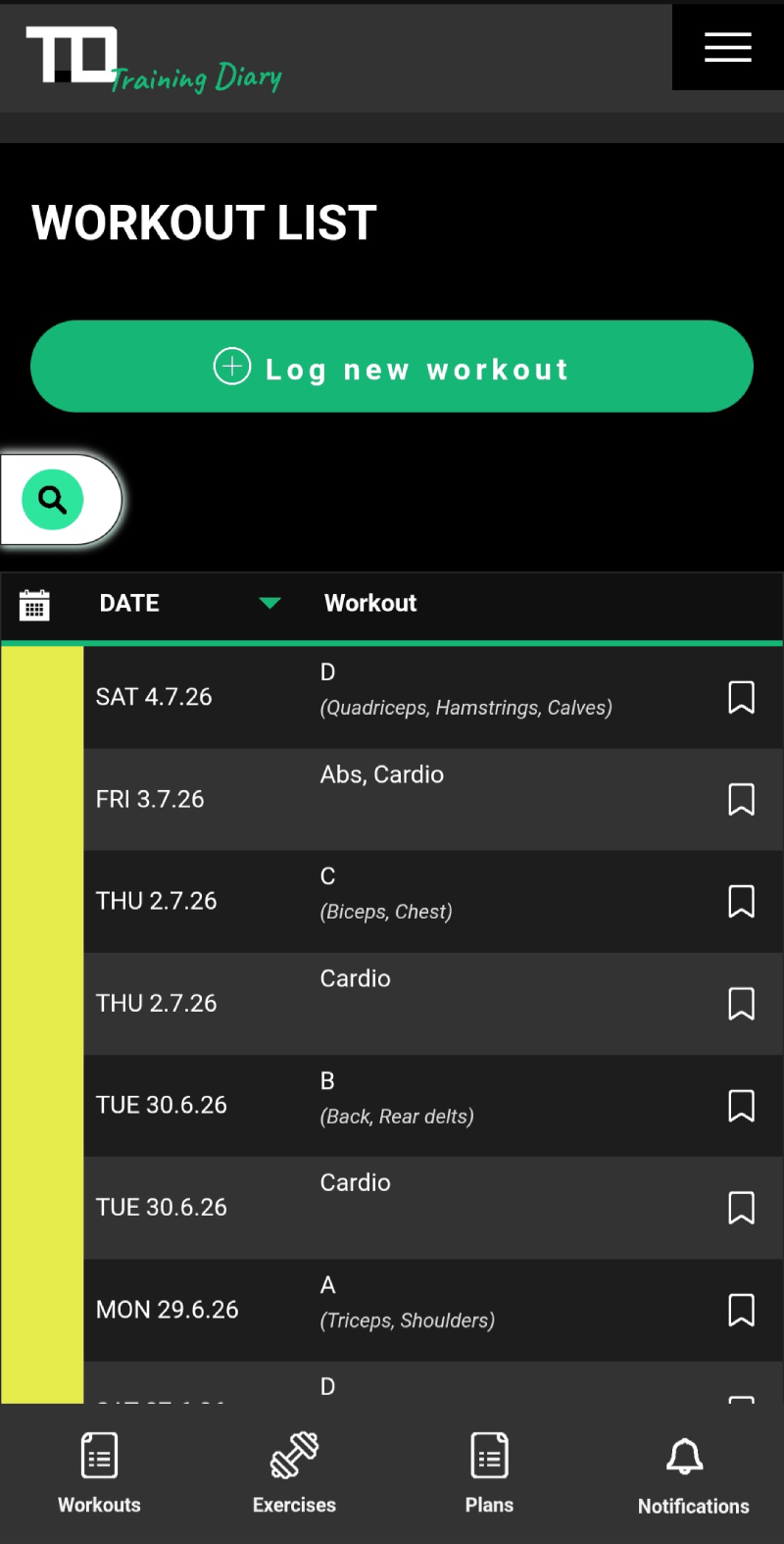

 What it is for
- planning workouts
- recording workouts
 Key advantages over paper tracking
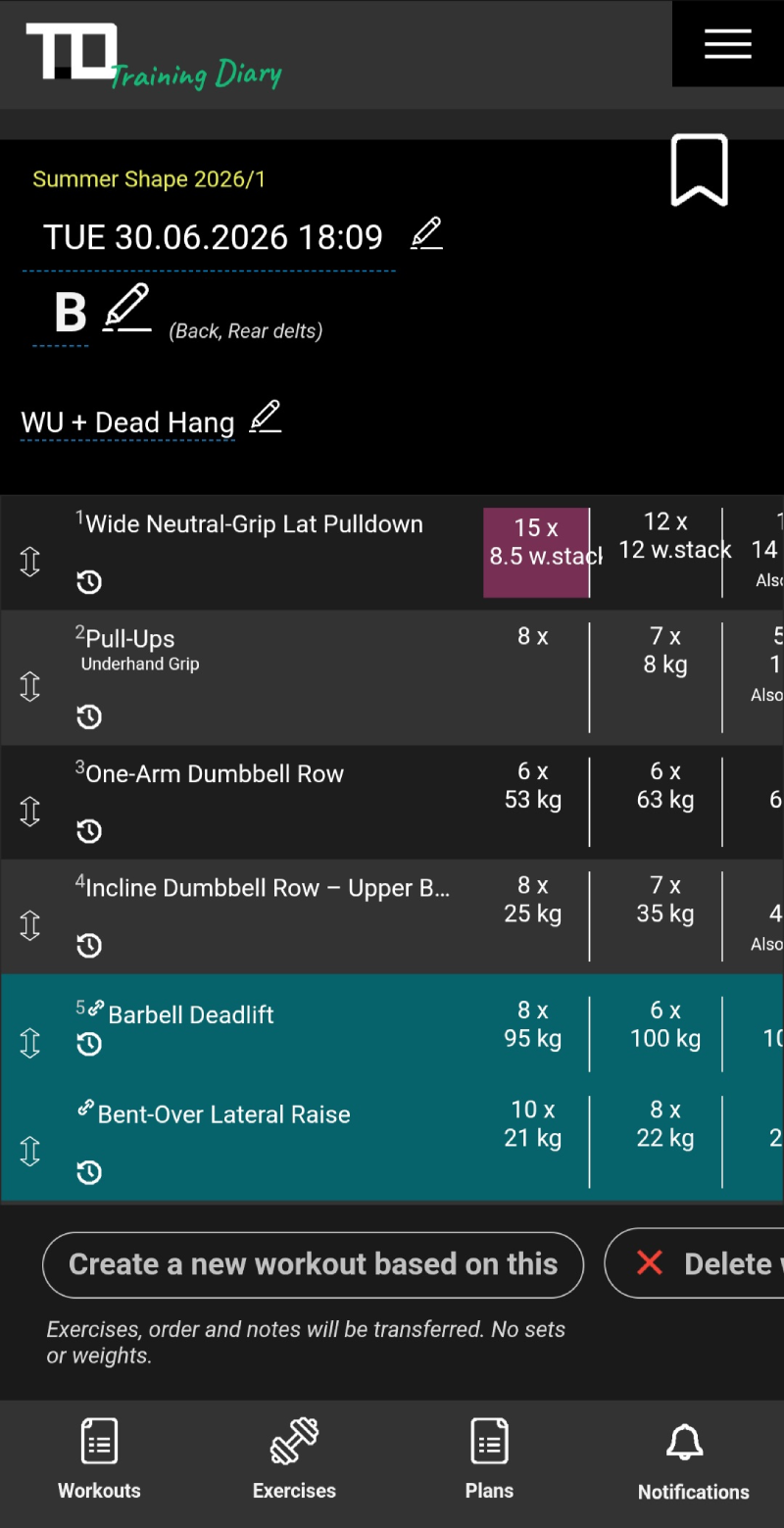
No need to rewrite the same exercises every time
Create a new workout easily based on your previous session or a prepared training plan. Exercise structure and notes can be copied with one click.
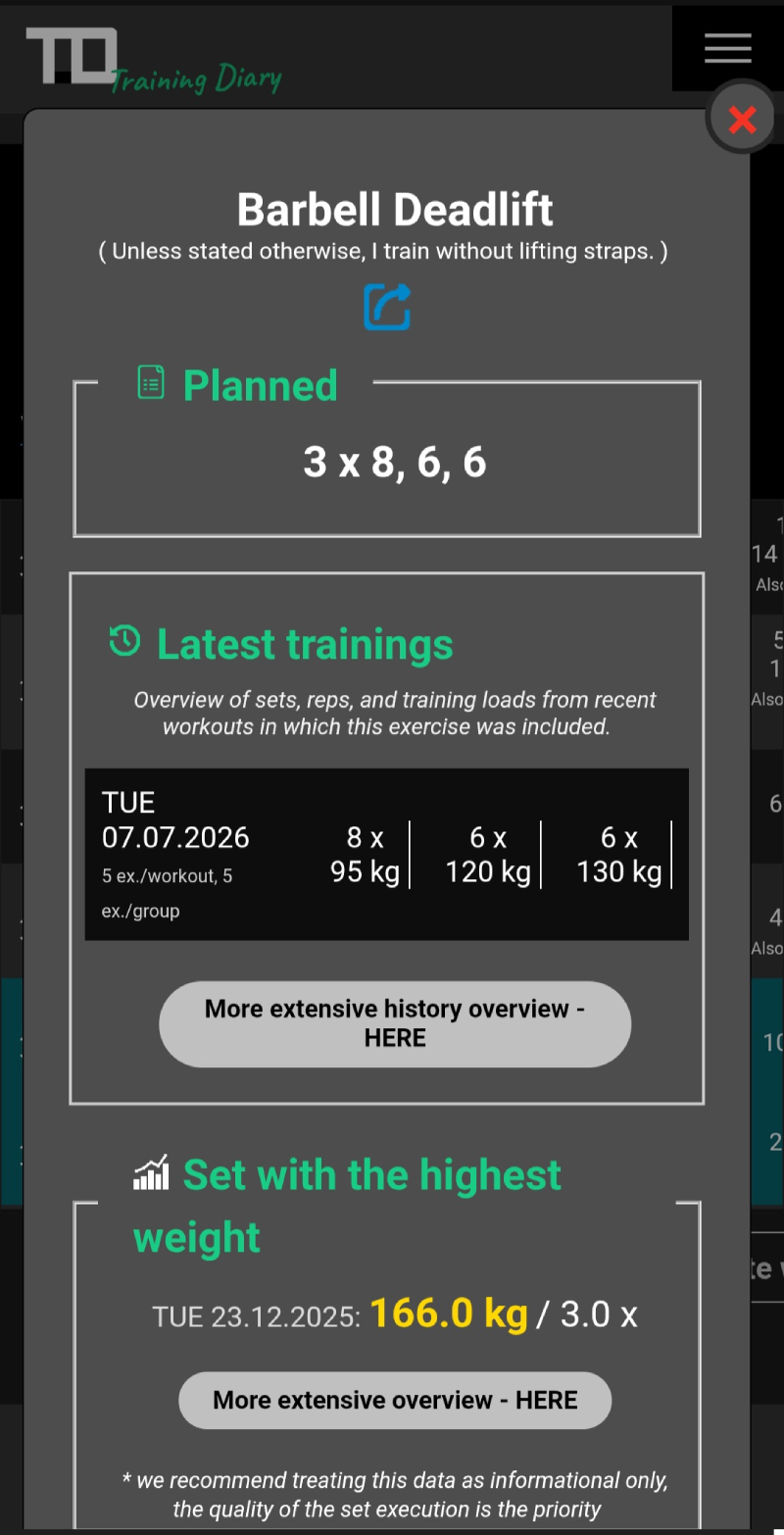
See your previous performance while training
For each exercise, you can view past sets, reps, and weights directly in the exercise detail. This helps you choose the right load for your current workout.
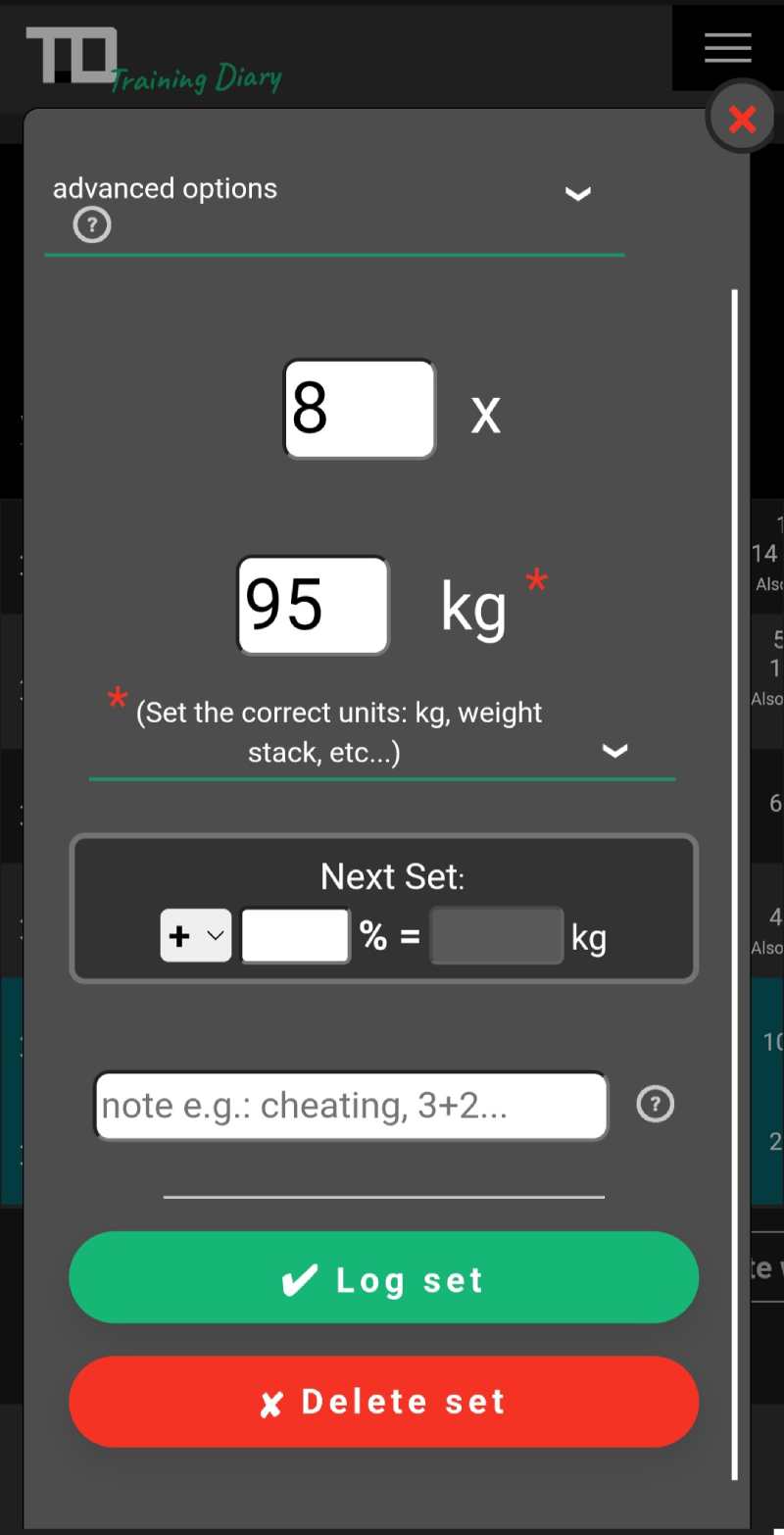
Easy Next Set Planning
While logging a set, you can plan an increase or decrease in weight by percentage for your next set. TD automatically calculates the weight for the next set, so you don't have to do the math during your workout.
 Why it is important to keep records
Successful progress in training (increasing strength, muscle growth or fat loss) is related to gradually increasing the load, such as weight, number of repetitions and overall training intensity. That is why it is important to keep clear records of your workouts.
 What you can track
In addition to exercises, you can record:
- training weights
- number of reps
- notes for individual sets
 Performance analysis
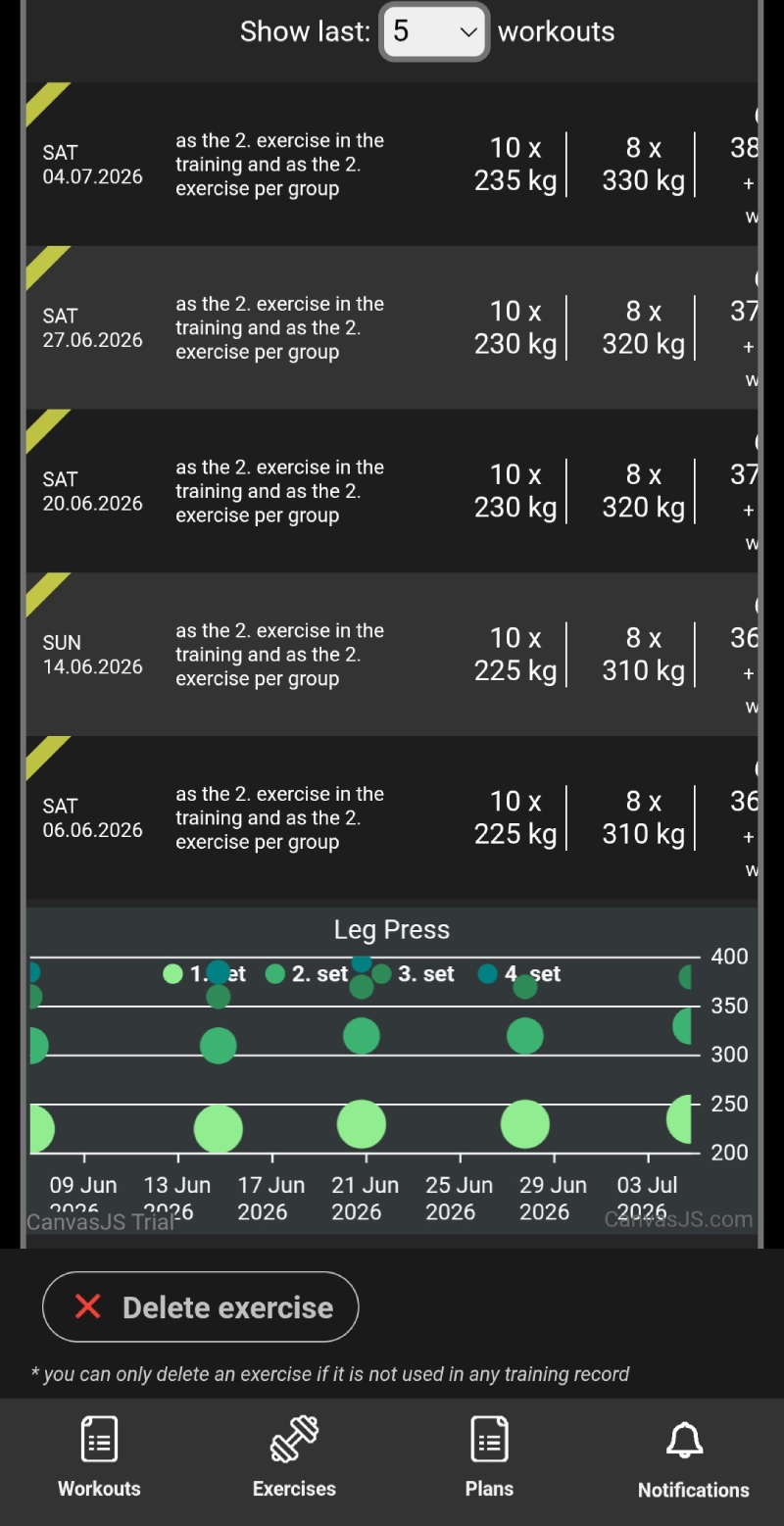
In the overview of each exercise, you can view statistics and performance history. You can compare workouts, track progress and analyze performance in sets. You also have an overview of your best-performing sets.
More info articles
- What Is a Workout Log and Why Should You Track Your Workouts?
- Paper or Digital Workout Log: Which One Is Better?
- How to Keep a Workout Log the Right Way
- Why Track Weight, Sets, and Reps in Your Workouts?
- How to Track Your Progress in Strength Training
- Common Workout Logging Mistakes and How to Avoid Them
- Why Should You Plan Your Workouts in Advance?
- How to Use a Workout Plan Effectively
- Progressive Overload in Strength Training
- How to Stay Motivated to Work Out Long Term